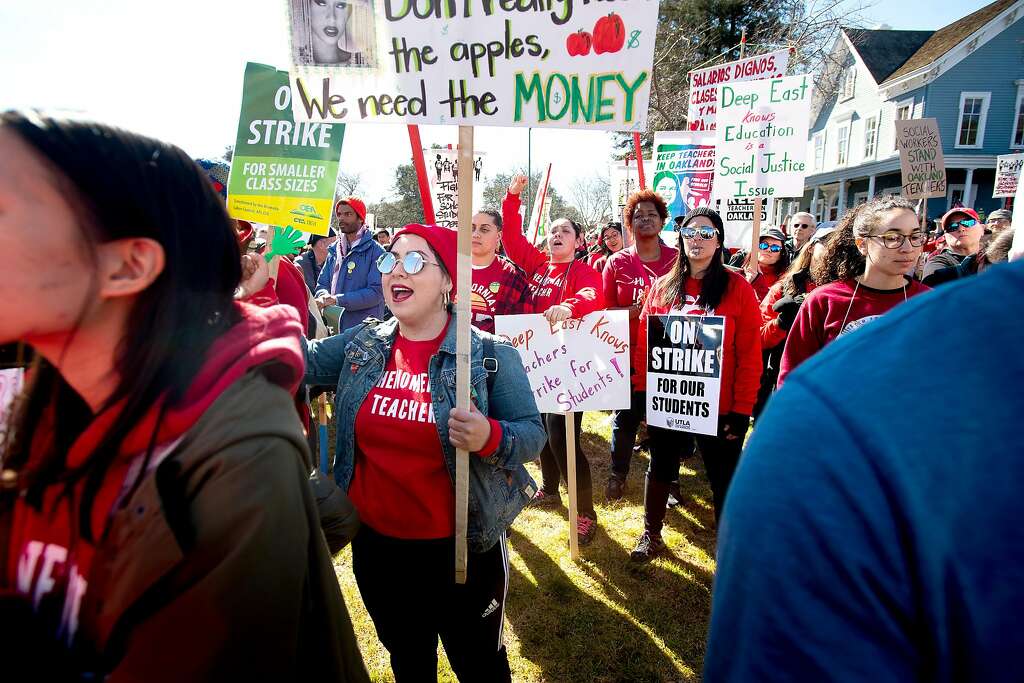
For seven days, 36,000 Oakland public school students supported teachers by striking until a settlement was reached regarding their requests for higher wages.
Teachers on average in America gain about 58 thousand a year; that’s around $27.88 per hour (Niche). The cost of living in the Bay Area is not like it used to be, as “the average one-bedroom apartment in Oakland costs about $2,680 per month” (Campbell, Vox.com). Teachers requested a pay raise as they can no longer afford to live in the area at this rate; however, the school district had consistently delayed them.
How the strike affected the school district…
As 86 Oakland public schools went on strike, some students who didn’t attend their regular classes went to take classes elsewhere, attended rallies to further support their teachers, or just treated it like another school break. Oakland Unified has a “net loss of $1 million in state funding daily during the first four days of the strike, or a total of about $4 million, based on average daily attendance figures, according to the district” (Ruggiero, The East Bay Times).
What a parent had to say…
A parent, who allowed their child to strike with their teachers, said, “The Oakland teachers went on strike because they had been working without a contract for a year and a half…I believe the teachers have a very important job…If we don’t fund teachers and public schools, only the people with a lot of money will have access to a good education..” They went on to say, “the strike lasted over a week, so kids lost a lot of class time. I believe that it was still worth it, since we all learned by going through that experience. We learned about sociology-economics, politics, budgets, education, society, systems, culture, labor unions, history, equity.”
The contract…
A contract had been created after the strike ended. Oakland Unified agreed to a four year long contract that provides things such as “an 11 percent salary increase, a 3 percent bonus…smaller classes, more support staff and a five-month moratorium on school closures” (Harrington, Edsource.org). It may not be extremely much, but the teachers still got something out of this experience after all, as well as the students and parents.
The following graph shows how teachers wanted a 12 percent raise, but instead got an 11 percent raise and a one time 3 percent bonus (Green, KQED).
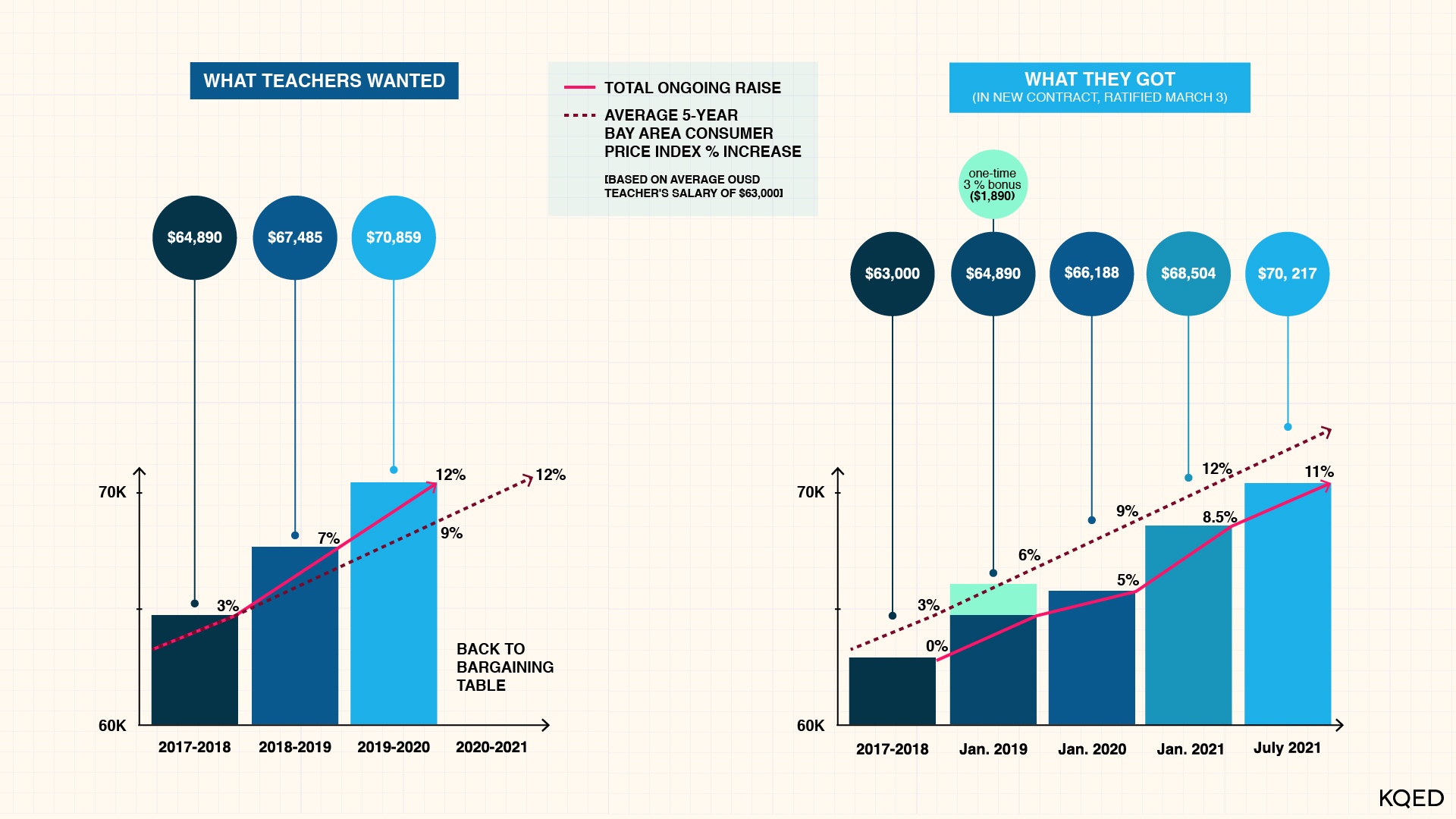
Graph: Elena Lacey / KQED
The parent claimed that, despite her child being away from school at the time of the strike, their grades remained the same; the experience for them was very worthwhile as it didn’t interfere with their overall learning experience. The parent continued to add that they felt “overall…the district responded in a positive way…but the contract failed [to give the teachers everything they wanted].” However, the parent thought that regardless, the protest was a success, since teachers “received most of what they were asking for.“
Video: The East Bay Times
Sources:
Campbell, A. F. (2019, March 04). Oakland teachers return to class after 7-day strike. Here’s what they won – and lost. Retrieved from https://www.vox.com/policy-and-politics/2019/3/4/18249872/oakland-teachers-strike-pay-raise
Green, M. (2019, March 05). GRAPHIC: What Oakland Teachers Wanted Vs. What They Got. Retrieved fromhttps://www.kqed.org/news/11730668/graphic-what-oakland-teachers-wanted-vs-what-they-got
Harrington, T. (2019, March 03). After seven-day strike, Oakland teachers approve new contract. Retrieved from https://edsource.org/2019/tentative-agreement-reached-in-oakland-unified-teachers-strike/609342
Ruggiero, A. (2019, February 21). Oakland teachers’ strike: What parents need to know. Retrieved from https://www.eastbaytimes.com/2019/02/20/oakland-teachers-strike-what-parents-need-to-know/
Ruggiero, A. (2019, February 27). Oakland teachers strike: Where are the students? Retrieved from https://www.eastbaytimes.com/2019/02/26/oakland-teachers-strike-where-are-the-students/